Screen Printing
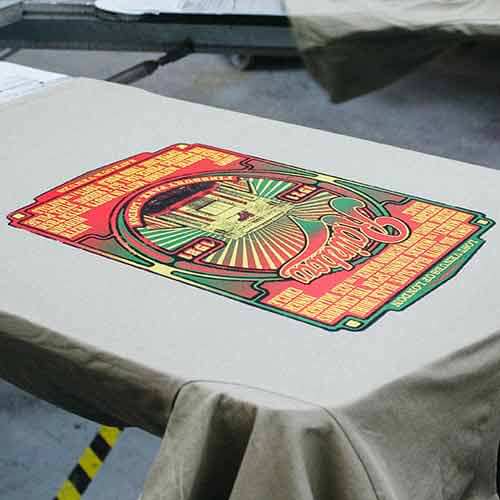
Screen printing pushes ink through a stencil on a mesh screen, one colour at a time. It costs least per t-shirt on larger orders and gives bright, solid colour that lasts.
Send us your artwork, quantity and deadline. We’ll recommend the most suitable production method.
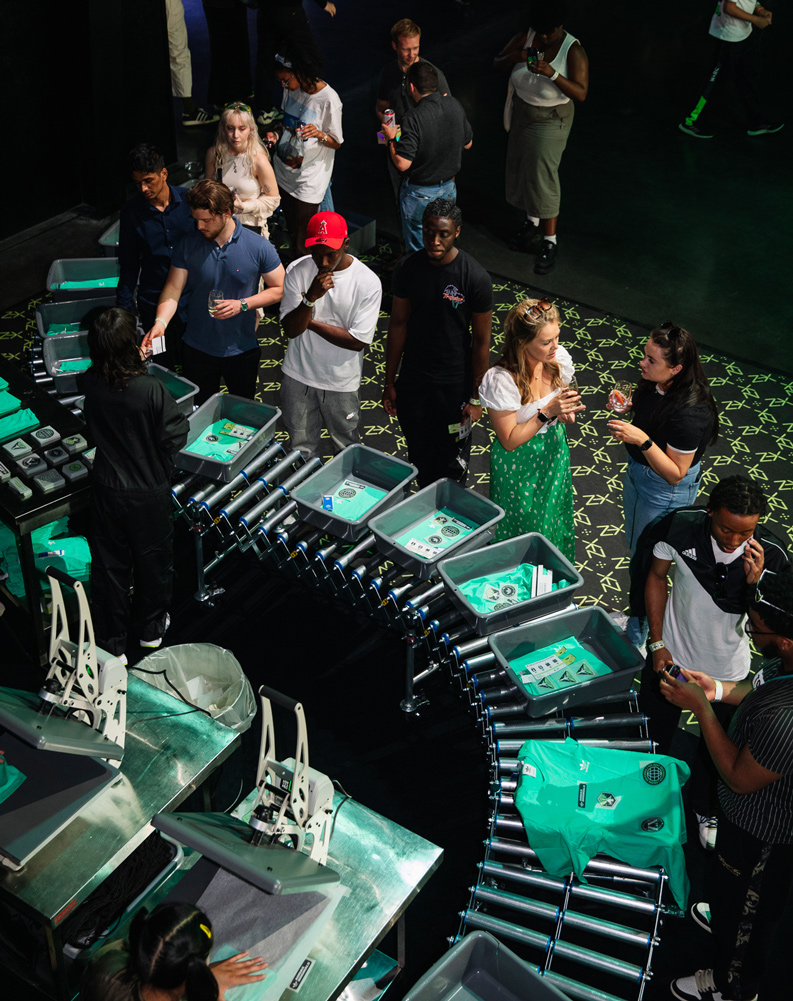
We bring the equipment, production team and experience needed to personalise products for your guests on-site.
Include your quantity, product requirements, delivery date and artwork wherever possible.
Every way to print your t-shirts in one place: screen printing, DTG, DTF, vinyl and embroidery. Find the right method for your garment type, design, quantity and budget, and compare prices, all on this page.
Rather talk? Call 0207 231 0866 →
Screen printing, DTG, DTF, vinyl and embroidery, all managed in London.
We offer every main garment and t-shirt printing method, whatever your artwork, garment or fabric. You don’t need to know which print type suits your job, because we’ll recommend one.
Here is some information about the different t-shirt printing and garment printing options available, from screen printing for bulk orders to DTG and DTF for full-colour short runs.
Answer a few quick questions and we will suggest the best method for your t-shirts.
Best method
Screen printing is usually the cheapest way to print 100 or more t-shirts. The screens are made once, so the price per t-shirt drops as the run grows.

Screen printing pushes ink through a stencil on a mesh screen, one colour at a time. It costs least per t-shirt on larger orders and gives bright, solid colour that lasts.


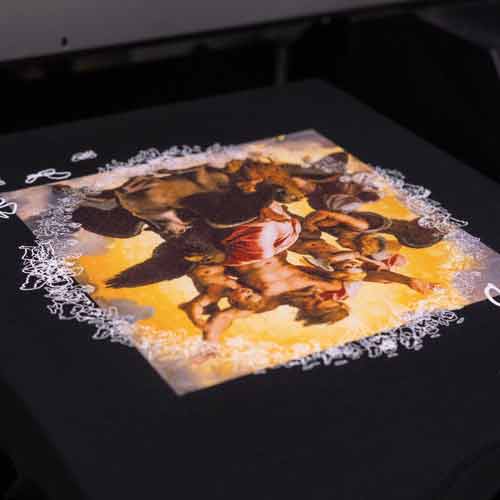
DTG printing prints your design straight onto cotton in full colour. There are no screens, so it suits runs from 10 units and artwork with photos or lots of colours.
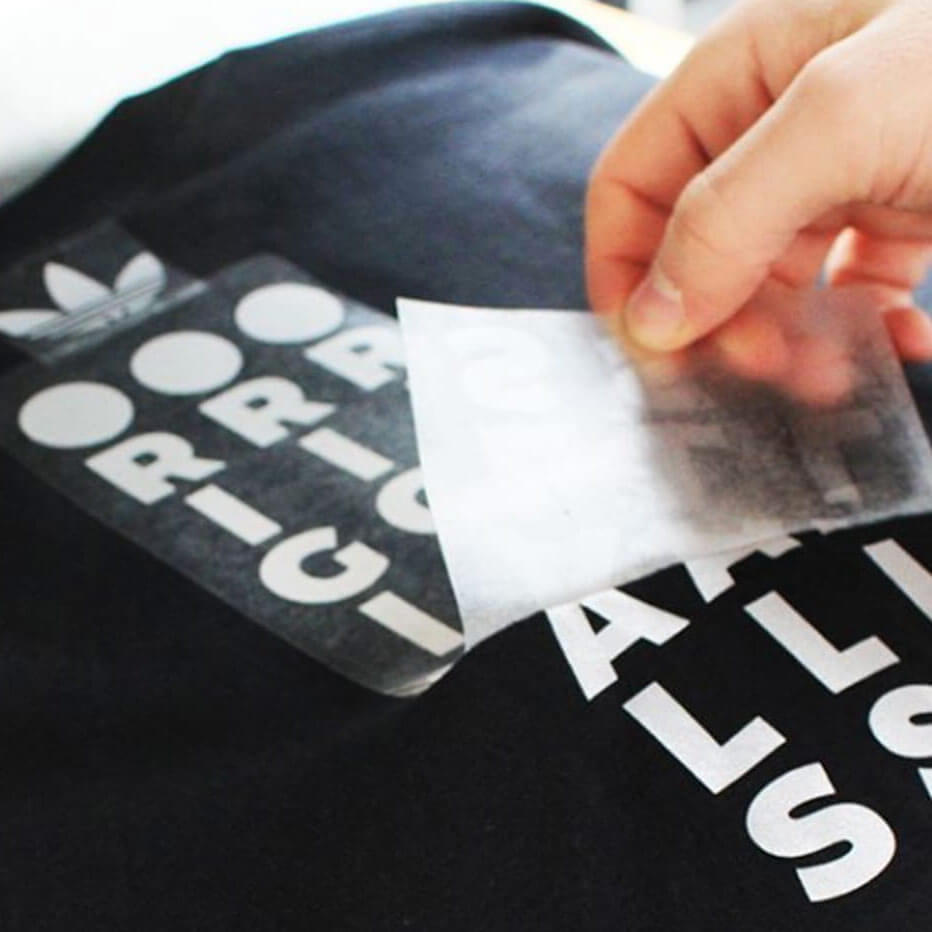
Vinyl printing cuts your design from coloured vinyl and heat presses it on. We use it for names, numbers and simple graphics, ideally in 1 colour, from 10 units.
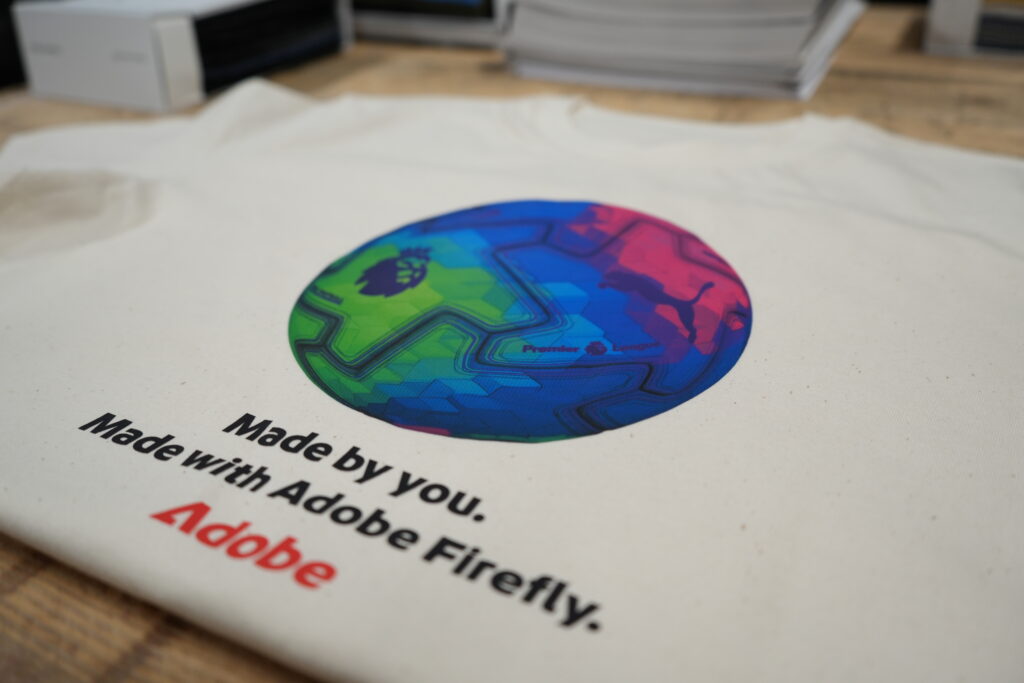
DTF printing prints full colour onto film, then heat presses it onto the garment. It works on cotton, polyester and nylon, light or dark, from 10 units.
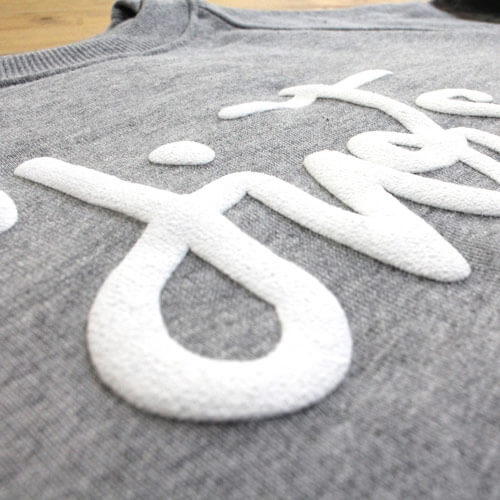
Screen printing can add speciality inks such as puff, metallic, glow in the dark and foil. They cost extra, so ask us for a price.
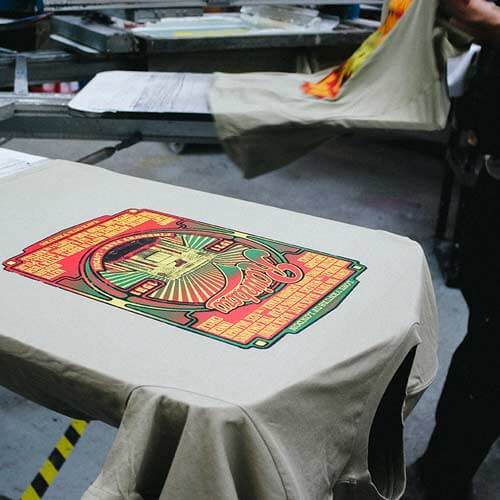
For bulk t-shirt printing from 100 units, screen printing usually gives the lowest price per t-shirt.
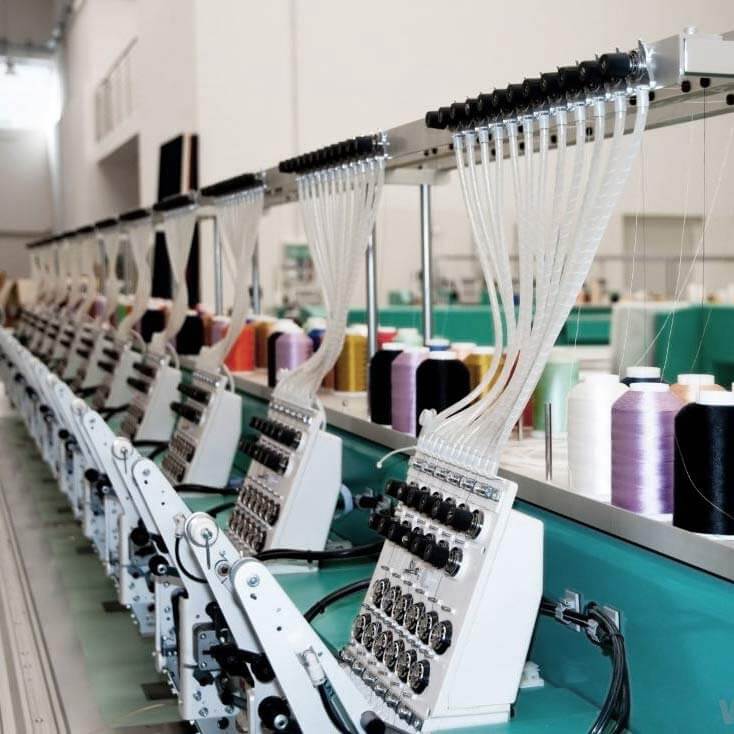
Embroidery adds a premium, stitched finish to heavier garments such as hoodies, sweatshirts, polos and caps. For t-shirts, a printed logo is usually the better option.
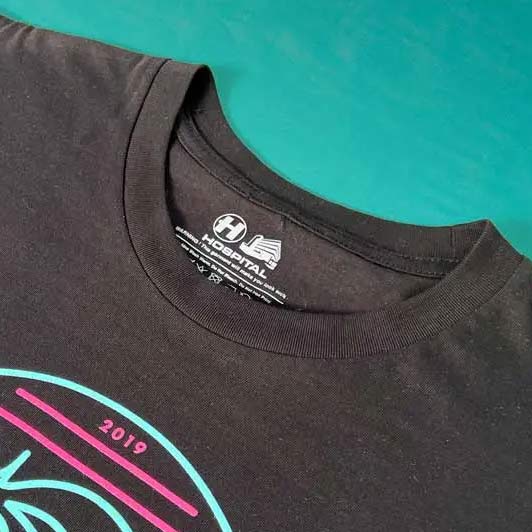
Complete your t-shirts with garment finishing: relabelling, inside neck printing, folding, bagging and custom tagging, ready for retail or delivery.
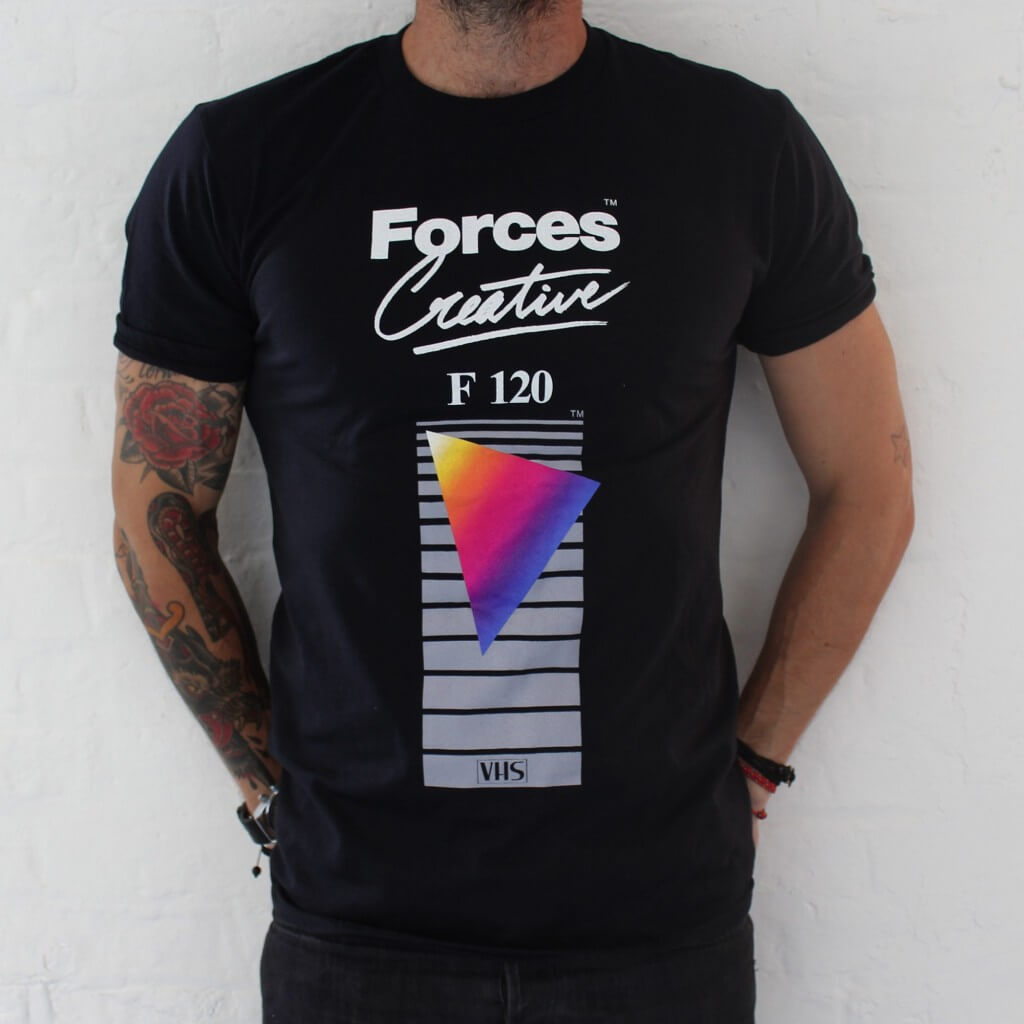
Starting print prices per t-shirt for each method.
| Method | At 100 t-shirts | Lowest price |
|---|---|---|
| Screen printing, 1 colour | £1.49 | £0.56 at 5,000 |
| DTG, up to A4 | £5.85 | £4.30 at 500+ |
| DTF, A4 | £4.45 | £3.50 at 1,000+ |
| Vinyl | Priced on your design, ask us for a quote | |
| Embroidery | Priced on your design, ask us for a quote | |
Print price per t-shirt, one position, ex VAT. Garments are priced on your quote. Each method page has a full price guide.

This is an oil based ink that was purposely created for t-shirt printing. It’s great if you want bright, solid colours that will barely ever fade. Plastisol also wins every time for tonal designs and can retain very fine detail, even over large week long print runs. The main drawback is that it’s not as breathable and heavier to wear than water based ink.
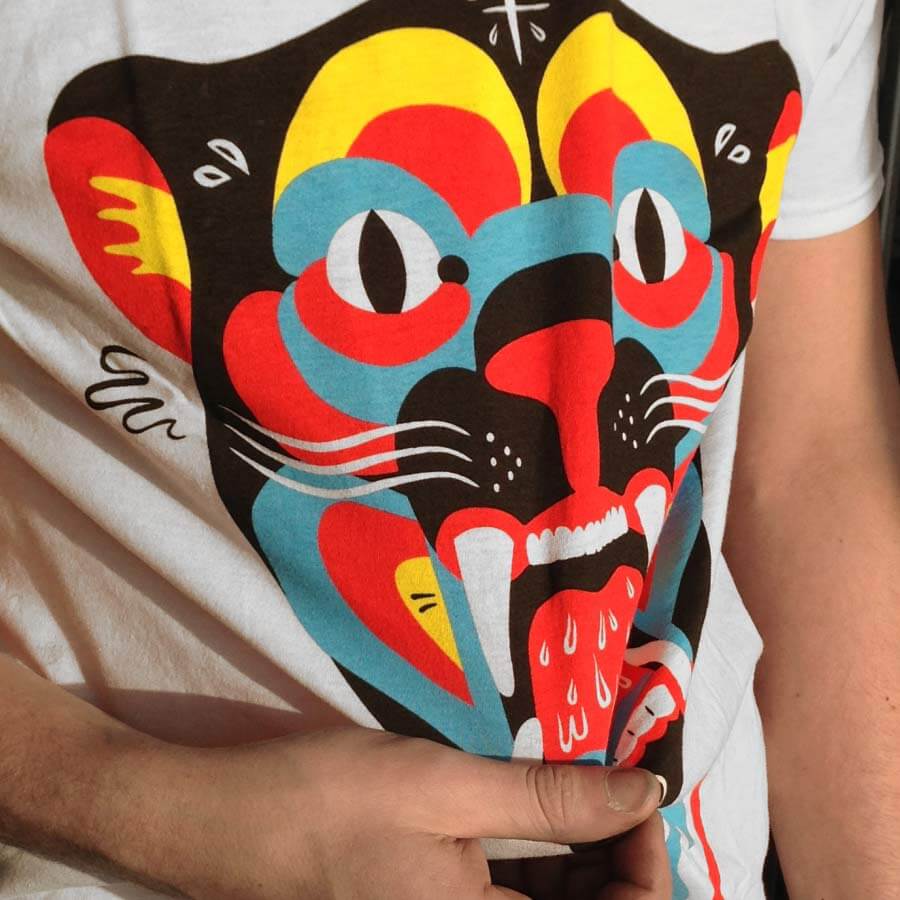
Sometimes the best choice on light garments, the ink really penetrates the fabric leaving a non-glossy, super soft, almost textureless finish. It’s also the most ecological choice. A downside is the colours will not stay box-fresh bright after washing and won’t show up well on darker fabrics. The ink is also prone to drying out during the run, which may lead to inconsistencies.
This is the process of printing designs onto special transfer paper and then applying the transfer paper onto the t-shirt or garment using a commercial heat press. It enables full-colour images to be printed very quickly and is a great option for promotional clothing. For more information, see our guide to heat transfers.
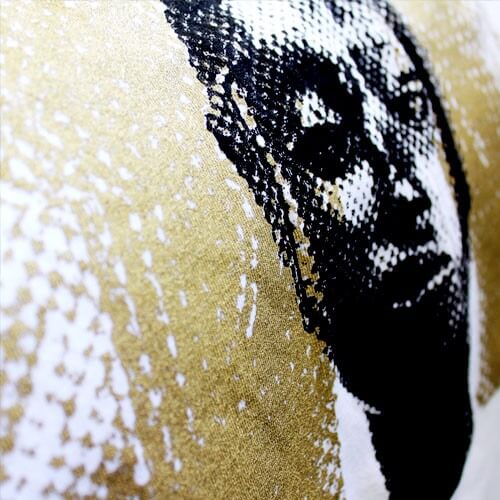
These inks are made up of a mixture of pigment and a liquid resin. The pigments have to be ground so that they are fine enough to pass through the mesh of a screen, which makes them less brilliant than foiling, however the results are longer lasting.
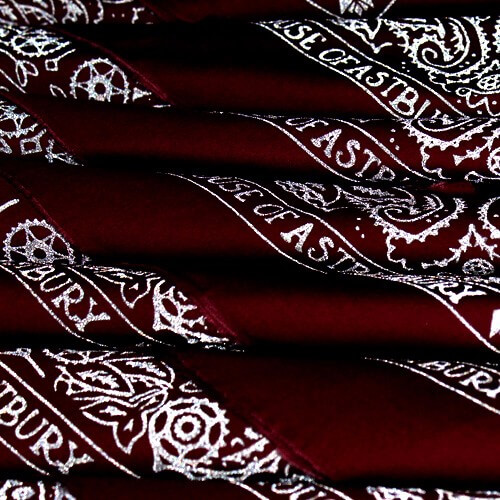
Made up of a lycra binder mixed with light reflecting glass beads, this ink works really well both as a decorative tool and to increase night time visibility. It really comes to life in front of direct light, so the light bounces back.

Chemically designed to puff up when cured, these inks become raised when they reach the correct temperature. This process works really well with large and bold designs, but also as a final accent colour in a multi-layer print.
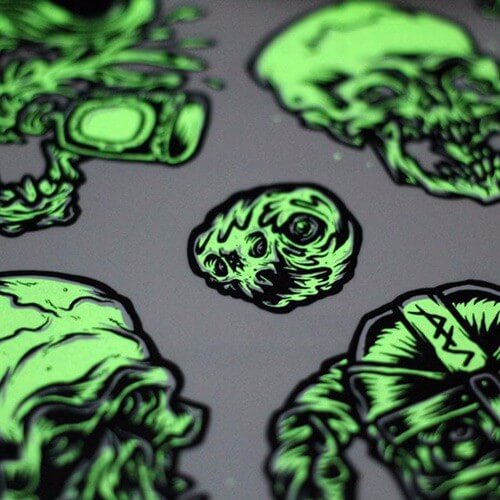
Photo luminescent inks owe their magic to phosphors, a chemical that absorbs energy and re-emits it as visible light. Glow in the dark inks can be produced in a variety of colours, but the human eye is most sensitive to green light so this will appear brightest.
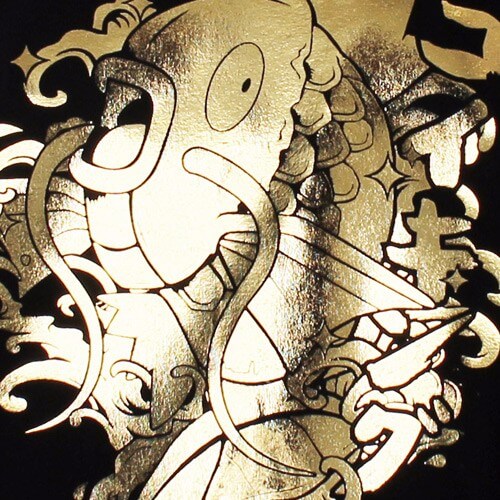
We supply and print a number of different coloured foils for application onto almost any garment. The print process involves us screen printing a glue and then, once it has cured, we heat press the foil of your choice in place.
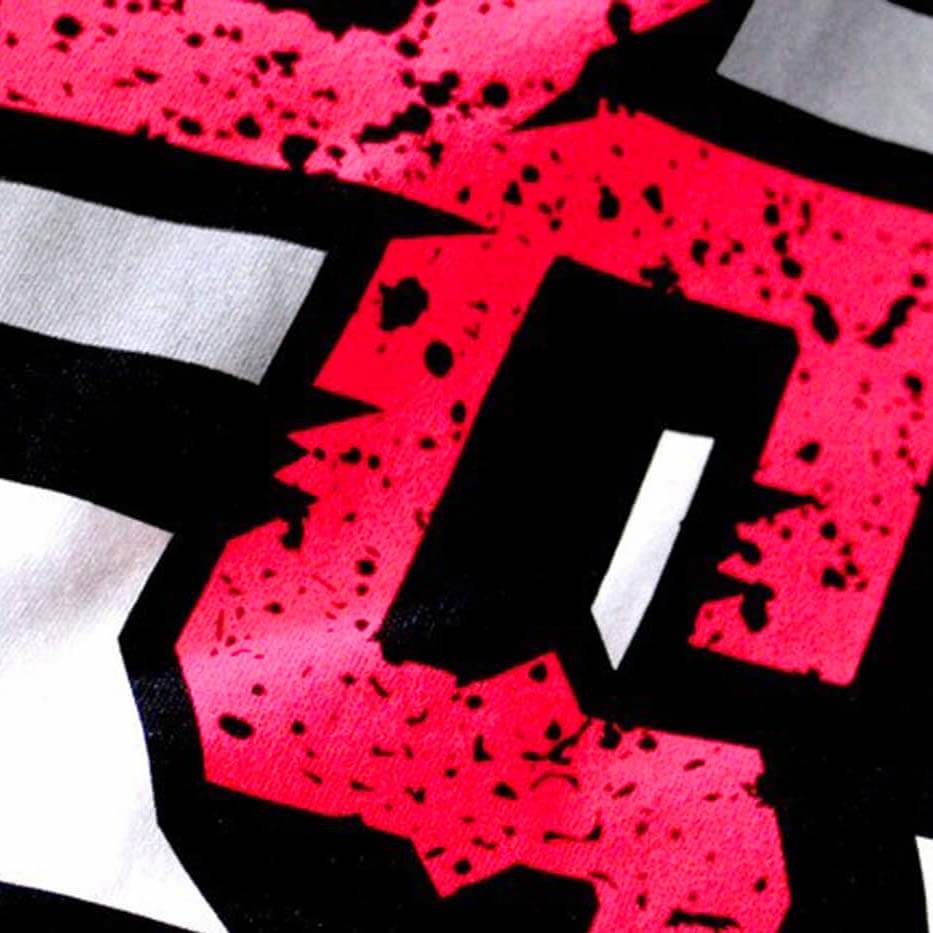
The pigment in fluorescent ink works by absorbing UV energy and transmitting it as longer waves. The inks can be fairly transparent, so almost always require either a base or double hit, but the final outcome is striking, particularly on dark garments.
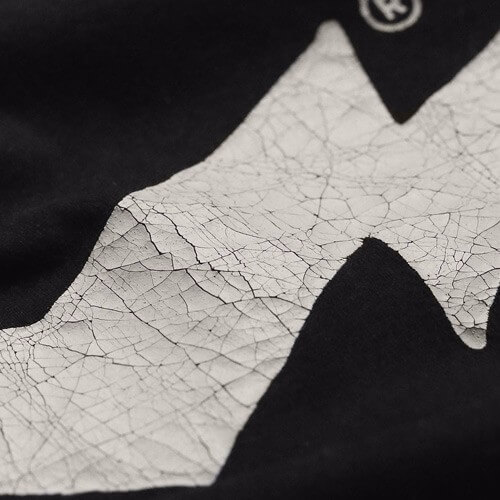
Use it to give t-shirts an instant vintage look. A self crack base is applied before the top coat is printed. The heavier the ink application, the larger the cracks will appear.
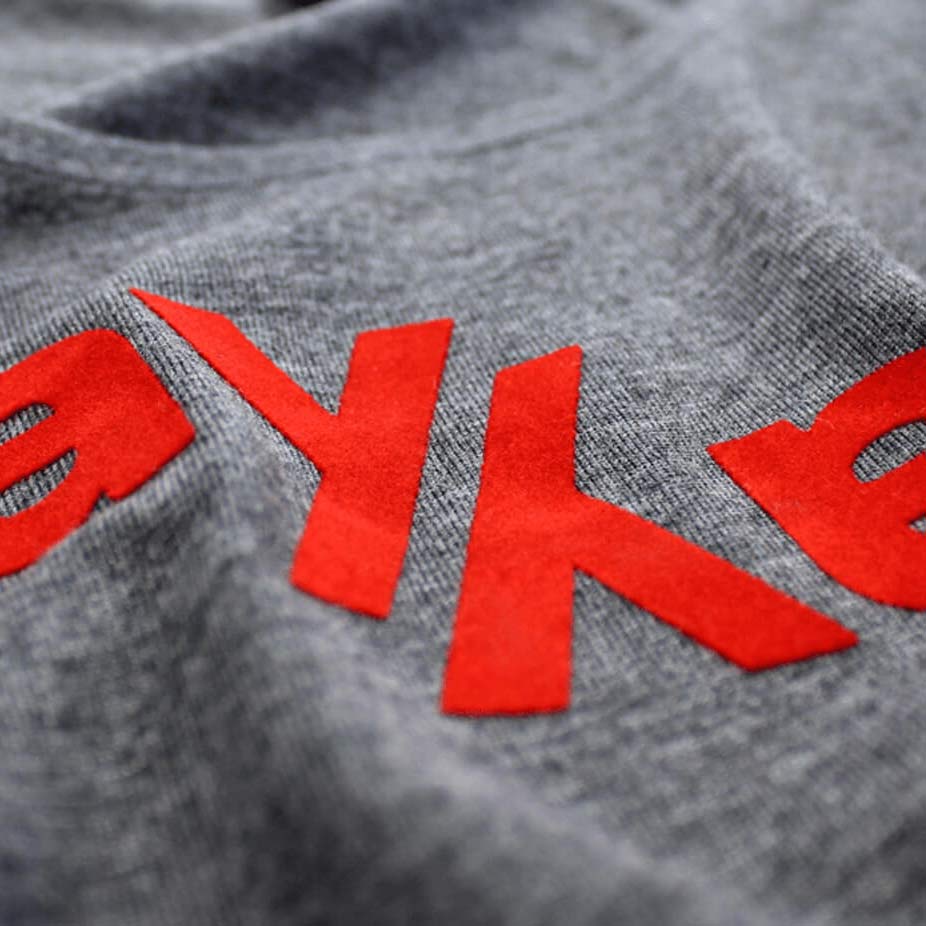
Not so much an ink as a transfer, flock is a way of adding a soft, velour-like texture to a design. The process works by first screen printing an adhesive base before applying small synthetic or natural fibres and heat pressing to seal.
Send us your garment choices, quantities and artwork and we’ll come back with a full quote.
See and feel your result before the full run. Sampling is available on every method.
Sample prices
Send what you have and we will check it before anything is produced.
Turnaround times for bulk t-shirt printing depend on order size, print method, and garment availability.
Turnaround: typically 7 to 15 working days after you approve the final details, with order size and the time of year deciding where in that range you fall. Rush orders may be possible on request.
From value basics to premium heavyweight tees, we print on the best t-shirt brands. If you are putting a merch range together, a tee and a hoodie are the usual starting point. See our custom t-shirts and custom hoodies.
We can add embroidery, garment finishing and blank garments to any t-shirt order.

We embroider logos onto hoodies, caps, polos and jackets, so you can pair stitched pieces with printed tees.

Need your t-shirts retail-ready? We can relabel them, print inside necks, and fold, bag and tag them.
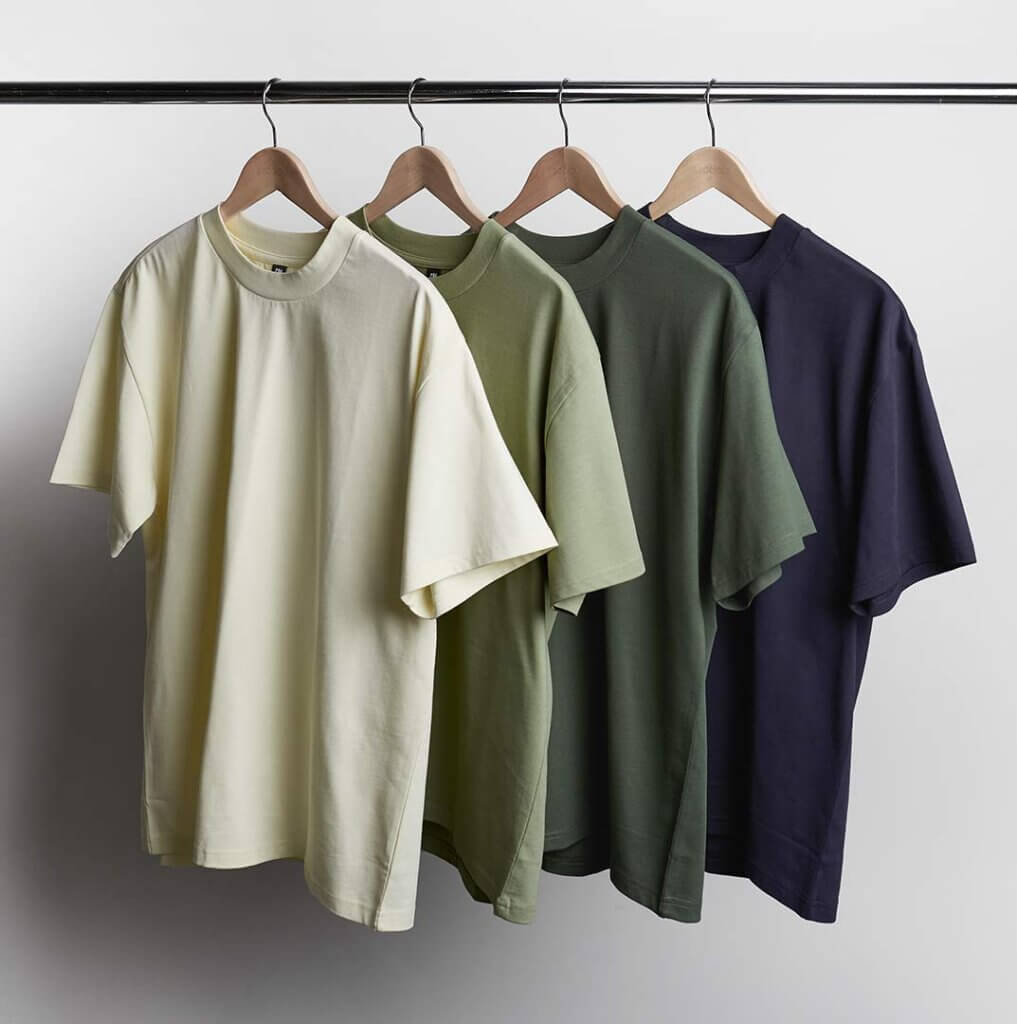
Choose from our custom t-shirts range, with blanks from Stanley/Stella, AS Colour and EarthPositive.
We don’t expect you to know which print type will best serve your needs. With every method under one roof, we recommend the right option for your design, quantity and budget, and keep quality consistent across every order, from a 10 piece sample run to thousands of bulk t-shirts. Find out more about t-shirt printing in London.
Get a quote for your project. Tell us about it and we’ll get back to you with pricing and advice.
Rather talk? Call 0207 231 0866
This site is protected by reCAPTCHA and the Google Privacy Policy and Terms of Service apply.
Yes. We print large orders for clothing brands, events and businesses, with consistent print quality on every garment. We print promotional t-shirts and branded merch, from small runs to large orders.
Yes. We ship t-shirt printing orders to customers across the UK and internationally.
Usually screen printing. It becomes more cost-effective at higher quantities and gives durable, high-quality prints. For smaller runs or complex full-colour artwork, DTG printing can be a better option. We advise on the best method based on your design, quantity, and garment choice.
It depends on the method: 25 units for screen printing, and 10 units for DTG and DTF, with sampling available. For screen printing, higher quantities deliver better value, while DTG and DTF suit smaller runs and sampling.
Yes. You can mix sizes and colours of the same garment in one order, as long as the design meets the minimum.
Yes, we offer DTG printing and other advanced techniques that allow for full-colour, high-detail designs including gradients and photographic artwork. That makes DTG a good fit for artwork with photos, gradients or fine detail.
It depends on order size, print method and garment availability. Usually it is 7 to 15 working days from final approval, and we deliver to both UK and international clients.
Yes. Screen printing uses a white base under your colours, and DTG and DTF add a white layer, so colours stay bright on black and dark t-shirts.
We print on premium blanks from Stanley/Stella, AS Colour and EarthPositive, as well as budget-friendly brands for events and bulk orders. Browse our garment catalogue.
Yes. We print the main design and add individual names and numbers in vinyl.
It depends on the method, quantity and number of colours. As a guide, a 1 colour screen print is £1.49 per t-shirt at 100 units, and a DTG print up to A4 is £5.85. Garments are priced on your quote.